Italo Balbo
M: Son of the CenturyItalo Balbo’s ascent in the Fascist movement began with the convergence of postwar ambition, local political turmoil, and organized violence. A demobilized Alpine captain and fervent patriot, he became the leading Fascist figure in Ferrara: an organizer who could present the movement as a force for rural reform while directing armed expeditions and helping shape its squads into a military force. His trajectory exposes the tension at the heart of that politics. The movement spoke of land and popular belonging, yet its local power was established through intimidation and assault.
Background and arrival in Fascist politics
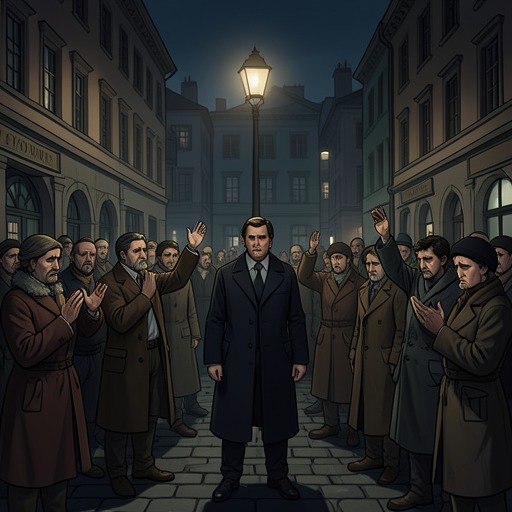
Balbo was twenty-four when he happened upon the funeral of Fascist dead in Ferrara on December 22. He had returned to his native city only for the Christmas holidays, and his attendance was chance rather than the culmination of a planned political role. His background nevertheless suggested an early, restless commitment to politics. The son of a respected provincial elementary-school teacher, he had attended Ferrara’s prestigious Ariosto secondary school before expulsion for poor performance and misconduct. At sixteen, already a fervent republican and admirer of Mazzini and Foscolo, he ran away to join an expedition organized by Garibaldi’s grandson in support of Albanian independence. His father sent friends to bring him home.
Balbo’s outward appearance became part of his public identity: unruly hair falling across his forehead and a thick black goatee. Yet his importance rested less on the image of a young republican than on what he could do with local organization. He was a war hero, demobilized and looking for both a direction and a job; he was also an avid opponent of Bolshevism. These traits brought him into a movement seeking to recruit men with military experience and to turn their discontent into political action.
A rural program and armed action
From Milan, Benito Mussolini promoted the slogan of land for those who worked it, proposing that uncultivated land be divided into small plots for settlers who would farm them directly. A Fascist land office was intended to administer the transfers. In Ferrara, the local paper Il Balilla, whose first issue appeared on January 23, likewise tried to distinguish Fascism from the interests of wealthy landowners, presenting the local movement as born in the public square rather than in rich people’s salons. Balbo, appointed editor at Mussolini’s direction, gave that local effort a figure who combined patriotism, military credentials, and anti-Bolshevism.
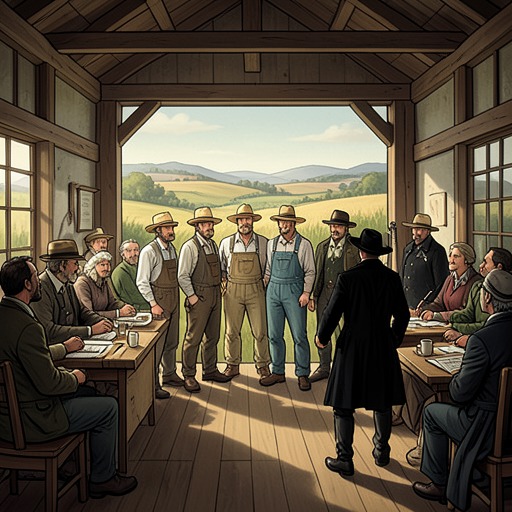
The agrarian conflict was not merely rhetorical. In Emilia, socialists controlled 223 of 280 municipalities, while peasant leagues had secured control over labor hiring and extended their influence across economic life, including work schedules, threshing, seed supplies, and crop management. For farmhands, who might find work for only 120 days a year, wages could determine whether they survived the idle months. This contest over livelihoods formed the setting for Balbo’s claim that Fascism could speak for rural workers even as armed Fascists confronted the leagues.
In one such expedition, Balbo rode with the Celibano squad and other armed men in a surplus military vehicle bound for Denore, on the right bank of the Po di Volano. He jumped down carrying a mace associated with wartime violence. The confrontation with peasants became a close, personal clash rather than the impersonal killing of the trenches: a Fascist drew a revolver and seriously wounded two peasants, while Balbo and two companions reported minor injuries. On the return journey, the armed party also wrecked the unprotected headquarters of the San Biagio league. The shared violence drew men of different backgrounds together. The narrative presents their sense of equality not as a program or institution, but as a bond created through taking part in the same violent action.
Balbo’s manner joined this violence to a conspicuous taste for pranks. When Prefect Cesare Mori prohibited walking sticks, Ferrara’s Fascists used dried cod as cudgels. Balbo urged them to wield their clubs with calculated style. In another expedition, members of the Celibano squad took a train to destroy the league at Voltana, near Ravenna. They waited while the building burned and left after its roof collapsed; the train reached Ferrara only half an hour late. Such episodes show the combination of organized destruction and casual irreverence that marked the local squads’ operations.
Leadership, spectacle, and military organization
Balbo’s power was also visible in his relationship with Benito Mussolini. When Mussolini visited Ferrara, Balbo received him in place of Leandro Arpinati, and a crowd of 20,000 Fascists acclaimed the visitor—twice the 10,000 reported at the preceding stop. Ferrara’s Fascists did not need persuasion to accept an electoral compromise: behind the scenes, they asked to nominate Mussolini in their province alongside the large landowners. At the station, Mussolini was accompanied by Umberto Pasella and Michele Bianchi, former leaders of the Ferrara Chamber of Labor, who now stood alongside the head of the Ferrara Agrarian Association. That lineup made visible the movement’s capacity to gather former socialist organizers and agrarian interests into a new political alignment.
Balbo appeared beside Mussolini with his curly hair and familiar club, relaxed and grinning where Mussolini was stiff and scowling. The contrast was not simply personal. Balbo could seem amused by the triumph and still respond to an interruption with a couple of blows from his cudgel, then continue on without looking back. His lightness did not soften the force he wielded; it made violence appear casual, available at a moment’s notice.
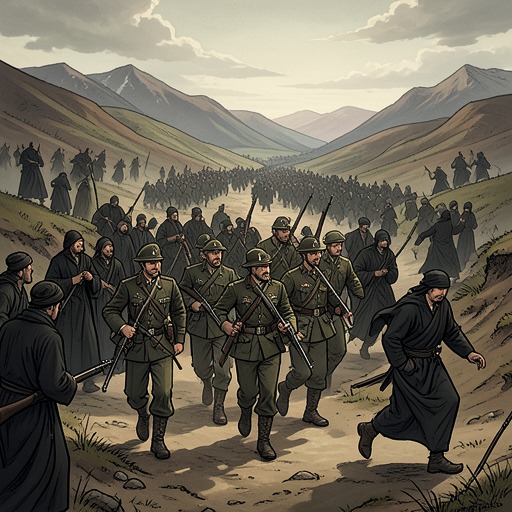
In August, Balbo and Dino Grandi travelled from Bologna to Gardone Riviera after the Po Valley Fascists had decided to defy Mussolini’s pacification pact. Having revered Gabriele D’Annunzio from afar, they came to offer him leadership of Fascism. The approach reflected Balbo’s standing among the regional leaders opposing accommodation, but the subsequent mobilization also demonstrated his capacity to command them directly. On September 12, he and Grandi assembled 3,000 Fascists and led them in military formation from Romagna toward Ravenna. For the first time, Balbo succeeded in having the participants wear the black shirt as a uniform. The march made a mass of local squads look like an army and sharpened the movement’s central organizational choice: whether to become a party or an army. The proposed resolution was a party able to turn its members into soldiers at once.
Military discipline was not just a spectacle. A plan for regular, military formation called for former officers, especially men from the Arditi and infantry, to command the action squads. It also specified that gunners should know Austrian and Italian machine guns and automatic pistols. The details mark a movement seeking to make organized force dependable, technically capable, and ready for decisive action. Balbo’s role belongs to this effort to give the squads a structure that could outlast a single street confrontation.
Expanding power and confronting the state
On January 6, Balbo secretly met in Oneglia with a general and the Tuscan Fascist leader Perrone Compagni to begin organizing a national Fascist militia. The meeting marked an extension of his work beyond Ferrara: the regional organizer was helping lay foundations for a national armed structure. In April, during the Minister of Agriculture’s visit to Ferrara, Balbo confronted Mori, the prefect of Bologna and a determined representative of state authority. He threatened that a whistle from him would bring thousands of Fascists to surround and seize the minister. Mori had to promise the release of Gino Baroncini, a leading Bolognese Fascist who had been arrested during a punitive raid. Balbo’s threat treated the state’s officials as vulnerable to the forces he could summon, and the promised release showed the practical leverage behind the display.
On May 11, mobilization began at midnight. Thousands of impoverished groups set out from remote farmhouses across the Ferrara countryside, moving on foot, by bicycle, in wagons, and in barges drawn along the Po di Goro and Po di Volano. The range of routes and transport gives the mobilization a material scale: it depended on networks reaching into the countryside, not simply on a crowd assembled in the city. Later, Balbo received an urgent message from Ravenna reporting that Balestrazzi had been beaten to death, that there had been general shooting, that seven people were dead, and that the city was in the hands of subversives. The message registers the continuing crisis in which his local organization operated, though the account does not specify his response to it.
Balbo’s significance lies in the way he joined political language, local organization, and force. He could promote a land program that distinguished Fascism from wealthy agrarians, while his squads attacked peasant-league headquarters; he could organize a uniformed march and pursue a national militia while treating intimidation as a practical instrument against state officials. Ferrara under his leadership was therefore both a political base and a rehearsal ground for a broader transformation: armed local bands presented as a disciplined force capable of exerting power beyond the streets.